How Does a Pilot-Operated Diaphragm-Type Solenoid Valve (NC) Work?
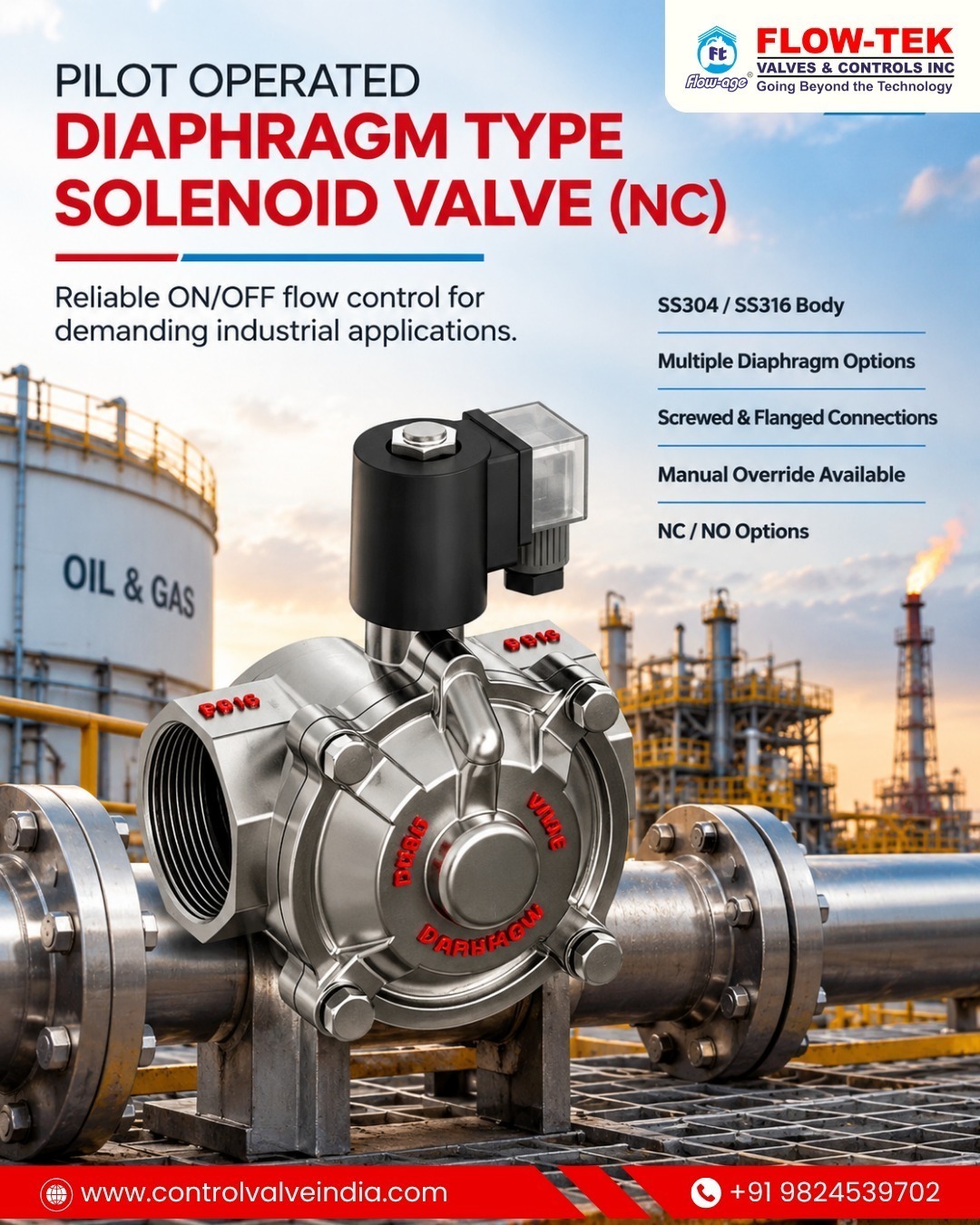
A Pilot-Operated Diaphragm-Type Solenoid Valve (NC) is an electrically controlled valve that regulates the flow of compatible liquids and gases in industrial systems. NC stands for Normally Closed, meaning the valve remains closed when the solenoid coil is de-energised and opens when the coil receives the required electrical signal, provided operating conditions are suitable.
Flow-Tek Valves & Controls Inc. provides valve solutions for industrial fluid control applications. Selecting the right solenoid valve involves understanding its operating principle, pressure requirements, material compatibility, and intended application.
If you are searching for a Pilot-Operated Diaphragm-Type Solenoid Valve Manufacturer in Ahmedabad, this guide explains the valve’s construction, working principle, advantages, applications, and selection criteria.
What Is a Pilot Operated Diaphragm Type Solenoid Valve?
A pilot-operated diaphragm-type solenoid valve is an automatic flow control device that combines an electromagnetic actuator with a flexible diaphragm. Instead of using the solenoid to move the entire main sealing element directly, it uses a smaller pilot mechanism to control pressure within the diaphragm chamber.
The main components generally include a solenoid coil, plunger, pilot orifice, diaphragm, valve body, seals, and main flow passage. Depending on the model, the valve may be designed for water, air, or other compatible media.
A conventional pilot-operated design typically requires a minimum differential pressure to function correctly. Therefore, check the manufacturer’s operating specifications before selecting a valve for a particular application.
How Does a Normally Closed Pilot Operated Diaphragm Solenoid Valve Work?
The working principle relies on electromagnetic actuation and pressure differentials.
1. When the Valve Is De-Energized
When the electrical supply is switched off, the solenoid plunger closes the pilot orifice. Fluid pressure builds up in the chamber above the diaphragm, helping hold the diaphragm against the valve seat. As a result, the main flow passage remains closed.
2. When the Solenoid Coil Is Energised
When the coil receives the specified electrical supply, it generates a magnetic field that moves the plunger and opens the pilot orifice.
3. Pressure in the Diaphragm Chamber Changes
Opening the pilot orifice allows fluid from the control chamber to escape toward the outlet. This reduces the pressure above the diaphragm relative to the pressure below it.
4. The Main Flow Passage Opens
The resulting pressure difference lifts the diaphragm from its seat, allowing fluid to flow through the main passage.
5. The Valve Returns to the Closed Position
When the electrical supply is removed, the pilot orifice closes. Pressure rebuilds in the diaphragm chamber, allowing the diaphragm to return to its seat and stop the flow.
Important: This sequence describes a typical internally piloted, normally closed valve. Precise operation depends on the valve design, fluid pressure, and the manufacturer’s specifications.
What Are the Main Components of a Pilot-Operated Diaphragm Valve?
Understanding the main components helps users select and maintain the appropriate valve.
* Solenoid Coil: Produces the magnetic field required to operate the valve.
* Plunger or Armature: Moves in response to the electromagnetic field.
* Pilot Orifice: Controls pressure within the diaphragm chamber.
* Diaphragm: Opens or closes the main flow passage.
* Valve Body: Houses the internal mechanism and connects the valve to the piping system.
* Spring Mechanism: Helps return moving components to their default position in designs that incorporate a spring.
* Seals and Gaskets: Help prevent leakage and maintain sealing performance.
Select construction materials based on the fluid, pressure, temperature, and environmental conditions.
What Are the Advantages of a Pilot-Operated Diaphragm-Type Solenoid Valve?
Pilot-operated diaphragm solenoid valves are commonly used where automated fluid control and relatively high flow capacity are required.
1. Efficient Control of Larger Flow Passages
The pilot mechanism uses pressure differential to assist diaphragm movement, allowing the valve to control larger flow passages than many direct-acting designs.
2. Convenient Electrical Automation
The valve can be operated through compatible electrical control systems, timers, sensors, and programmable logic controllers (PLCs).
3. Reliable Flow Regulation
When selected and operated correctly within the specified pressure range, the valve provides consistent opening and closing performance.
4. Practical Industrial Design
The solenoid and diaphragm arrangement offers a compact solution for many automated piping and fluid-handling systems.
5. Versatile Applications
Depending on its materials and technical specifications, the valve may suit water treatment, irrigation, HVAC, cooling systems, and industrial equipment.
Where Are Pilot Operated Diaphragm Solenoid Valves Used?
Pilot-operated diaphragm-solenoid valves can be used in various industries that require automated fluid flow control.
* Water Treatment Plants: Controlling water supply in filtration and treatment equipment.
* Irrigation Systems: Automating water distribution in agricultural and landscaping systems.
* HVAC Systems: Managing compatible fluids in heating and cooling installations.
* Industrial Automation: Controlling fluid movement in automated manufacturing processes.
* Washing Equipment: Regulating water supply in industrial cleaning machinery.
* Cooling Systems: Managing compatible fluids in industrial cooling circuits.
* General Fluid Handling: Automating flow through suitable industrial piping systems.
Always verify the valve’s approved media, operating pressure, temperature range, and electrical requirements before installation.
How Do You Choose the Right Pilot Operated Diaphragm Solenoid Valve?
Before buying from a Pilot-Operated Diaphragm Solenoid Valve Supplier in India, evaluate these technical factors.
1. Operating Pressure
Check the minimum and maximum operating pressure and the required differential pressure. Insufficient differential pressure can prevent a conventional pilot-operated valve from operating correctly.
2. Fluid Compatibility
Select appropriate diaphragm, seal, and body materials for the intended fluid. Water, air, oils, and chemicals may require different material combinations.
3. Valve Size and Flow Capacity
Match the port size and flow characteristics to the system’s required flow rate and acceptable pressure drop.
4. Coil Voltage and Electrical Supply
Confirm the required AC or DC voltage, electrical rating, connection type, and environmental protection requirements.
5. Normally Closed Configuration
Choose an NC valve when the required default condition is to stop flow while the solenoid is de-energised. Confirm that this configuration meets the system’s operational and safety requirements.
6. Temperature Range
Verify the permitted fluid and ambient temperatures against the valve manufacturer’s technical specifications.
7. Installation and Maintenance
Follow the manufacturer’s guidance for flow direction, mounting position, filtration, and maintenance. Appropriate filtration can help prevent debris from obstructing the pilot orifice.
What Are Common Problems With Pilot-Operated Diaphragm Solenoid Valves?
Incorrect selection, contamination, or unsuitable operating conditions may affect valve performance.
· Valve Fails to Open: Check the electrical supply, differential pressure, and pilot passage for blockage.
· Valve Fails to Close: Inspect the diaphragm, seals, valve seat, and pilot mechanism for contamination or damage.
· Fluid Leakage: Check for worn seals, a deteriorating diaphragm, or debris on the valve seat.
· Slow Valve Response: Investigate pressure conditions, restricted pilot passages, and electrical supply issues.
· Inconsistent Operation: Verify that the valve is being used within its specified pressure, temperature, and fluid compatibility limits.
· Follow the manufacturer's maintenance instructions for inspection, cleaning, and replacement of worn components.
Why Choose Flow-Tek Valves & Controls Inc.?
Choosing the right industrial valve requires more than selecting a product by name. Buyers should consider technical specifications, operating conditions, material compatibility, and the supplier’s ability to provide relevant product information.
When evaluating a Pilot Operated Diaphragm Type Solenoid Valve Distributor in Gujarat, consider:
· Availability of suitable valve configurations.
· Clear operating pressure and temperature specifications.
· Appropriate diaphragm and sealing material options.
· Correct coil voltage and electrical compatibility.
· Product documentation and technical support.
· Suitability for the intended industrial application.
Contact Flow-Tek Valves & Controls Inc. to discuss product requirements and identify a suitable valve configuration. Confirm the availability of the required model and specifications directly with the company.
Frequently Asked Questions
1. What is a pilot-operated diaphragm-type solenoid valve?
It is an electrically controlled valve that uses a pilot mechanism and a flexible diaphragm to regulate fluid flow. The pilot mechanism changes the pressure in the diaphragm chamber to operate the main valve passage.
2. What does NC mean in a solenoid valve?
NC stands for Normally Closed. The valve remains closed when the solenoid coil is de-energised and opens when energised, depending on its operating requirements.
3. How does a pilot-operated diaphragm solenoid valve work?
When energised, the solenoid opens the pilot orifice, changing the pressure above the diaphragm. The resulting pressure difference opens the main flow passage. When de-energised, the pilot passage closes, and the diaphragm returns to its seat.
Keywords