
HYDRAULIC ACTUATION DELUGE VALVE
Description
Hydraulic Actuation Deluge Valve Manufacturer in India.
Industrial fire protection requires equipment that responds quickly and delivers water across an entire hazardous area. Facilities such as oil refineries, chemical processing plants, power stations, and offshore installations need dependable fire suppression systems to reduce the risk of fire spreading.
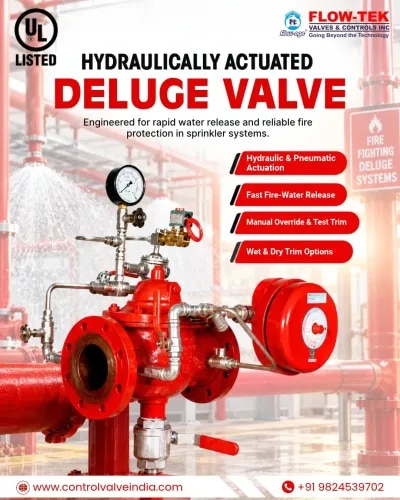
A Hydraulic Actuation Deluge Valve is an important component of these systems. It uses hydraulic pressure and a pilot-operated mechanism to control water flow during fire emergencies. When the detection system is activated, the valve releases water through connected sprinklers or spray nozzles to protect the designated area.
Flow Tek provides industrial deluge valve solutions designed to support fire protection requirements across different industrial applications.
What Is a Hydraulic Actuation Deluge Valve?
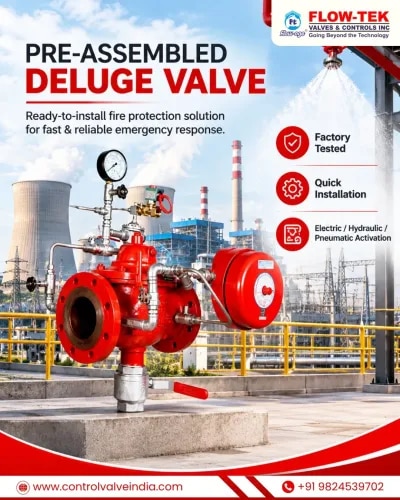
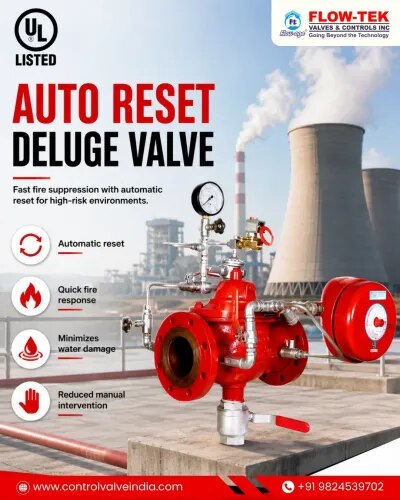
A Hydraulic Actuation Deluge Valve is a pilot-operated fire protection valve that uses water pressure in its control chamber to keep the main valve closed. When a heat-sensitive detection device or manual release mechanism operates, the hydraulic pressure is released, allowing the main valve to open.
Once activated, water flows through the distribution network and reaches all connected open spray nozzles at the same time. This arrangement is particularly useful in locations where conventional sprinkler protection may not provide sufficient coverage for rapidly developing fire hazards.
How Does a Hydraulic Actuation Deluge Valve Work?
Understanding its operating mechanism helps industrial buyers select the right fire suppression equipment.
1. Normal Standby Condition: Water pressure remains in the priming chamber, keeping the main valve closed and preventing unwanted water discharge.
2. Fire Detection: A heat-sensitive pilot sprinkler, fusible device, or hydraulic detection arrangement responds to the fire condition.
3. Pressure Release: The detection mechanism releases water pressure from the control chamber.
4. Valve Opening: The reduction in hydraulic pressure allows the main diaphragm or clapper mechanism to open.
5. Water Discharge: Water flows into the connected piping system and discharges through the open sprinklers or spray nozzles.
6. Manual Activation: An emergency manual release arrangement can also be used when immediate manual operation is required.
After activation, inspect and reset the system according to the manufacturer's operating instructions.
Technical Specifications of Hydraulic Actuation Deluge Valve
* Product Name: Hydraulic Actuation Deluge Valve
* Valve Type: Diaphragm-operated, pilot-controlled
* Pressure Rating: Up to 16 bar (232 PSI)
* Connection Size: DN 50 to DN 300
* Material Options: Ductile Iron, Cast Steel, Stainless Steel
* Actuation: Hydraulic, Pneumatic, or Electro-Hydraulic
* Manual Release: Available
* Operating Temperature: -20°C to 80°C
* System Type: Deluge Fire Protection System
Key Features of Hydraulic Actuation Deluge Valves
Selecting a suitable deluge valve involves considering its operating mechanism, construction, and compatibility with the fire protection network.
* Fast Response Mechanism: Opens when the hydraulic detection system releases pressure from the control chamber.
* Large-Area Fire Protection: Supplies water simultaneously to connected discharge devices.
* Manual Emergency Release: Supports manual activation when required.
* Flexible Actuation Options: Select hydraulic, pneumatic, or electro-hydraulic configurations based on system design.
* Industrial-Grade Materials: Available construction options support different operating and environmental conditions.
* Water and Foam Compatibility: Suitable configurations can be integrated into water-based and foam-water fire suppression systems.
Industrial Applications of Hydraulic Actuation Deluge Valves
A Hydraulic Actuation Deluge Valve is commonly installed in high-hazard environments where immediate water or foam discharge is essential.
* Oil and Gas Refineries: Protects fuel storage tanks, processing units, and pipeline areas.
* Chemical Manufacturing Plants: Provides fire suppression around flammable chemical storage and production zones.
* Power Generation Plants: Supports protection for transformers, turbines, and other critical equipment.
* Marine and Offshore Platforms: Helps protect machinery spaces, processing facilities, and hazardous operating areas.
* Aircraft Hangars: Provides large-area fire suppression for aircraft and maintenance facilities.
* Petrochemical Industries: Supports fire protection in facilities handling combustible liquids and gases.
Why Choose Flow Tek for Hydraulic Actuation Deluge Valve Requirements?
Choosing the right fire protection equipment is essential for maintaining industrial safety. Buyers should evaluate pressure ratings, connection dimensions, material compatibility, hydraulic trim arrangements, and discharge requirements before selecting a product.
Flow Tek focuses on industrial valve solutions for demanding applications. If you are looking for a Hydraulic Actuation Deluge Valve Manufacturer in Ahmedabad or a dependable Hydraulic Actuation Deluge Valve Supplier in Gujarat, Flow Tek can assist with product-related inquiries and suitable configuration requirements.
Whether your project involves a new fire suppression installation or an industrial system upgrade, selecting the correct valve configuration is an important step towards effective fire protection.
Contact Flow Tek Today for Product Details and Inquiries!
Frequently Asked Questions (FAQs)
1. What is a Hydraulic Actuation Deluge Valve?
A Hydraulic Actuation Deluge Valve is a pilot-operated fire protection valve that uses hydraulic pressure to keep the main valve closed. When the detection mechanism releases this pressure, the valve opens and supplies water to the connected sprinklers or spray nozzles.
2. How does a hydraulic deluge valve operate during a fire?
During a fire, a heat-sensitive pilot device or detection arrangement activates and releases pressure from the valve's control chamber. This allows the main valve to open and distribute water throughout the protected area.
3. What is the difference between hydraulic and pneumatic deluge valves?
A hydraulic deluge valve uses water pressure in its pilot control arrangement, whereas a pneumatic deluge valve uses compressed air in a dry pilot detection line. Both activate the main valve when their respective detection systems operate.
4. Which industries use hydraulic actuation deluge valves?
These valves are commonly used in oil and gas facilities, refineries, chemical plants, power stations, petrochemical industries, marine installations, and aircraft hangars.
5. What materials are available for hydraulic actuation deluge valves?
Common material options include ductile iron, cast steel, and stainless steel. The appropriate material depends on operating pressure, environmental conditions, and the application.