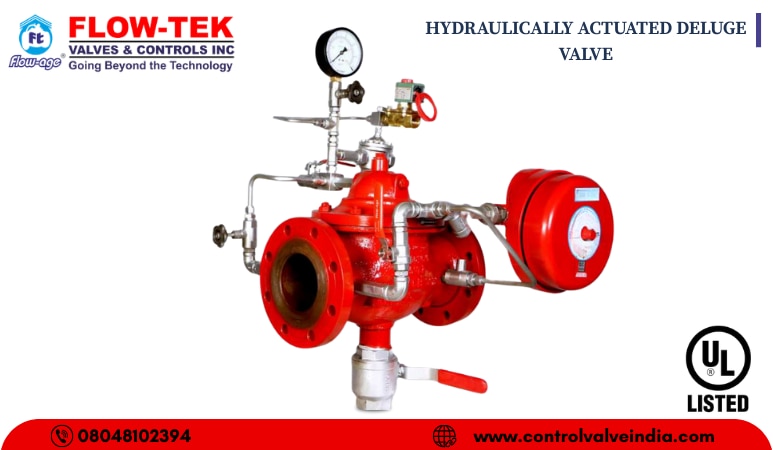
HYDRAULICALLY ACTUATED DELUGE VALVE
Description
Hydraulically Actuated Deluge Valve Manufacturer in India.
Fire protection is a major concern for industries handling flammable liquids, gases, chemicals, and other hazardous materials. In these environments, a fire can spread rapidly, making immediate water discharge essential to protect equipment, infrastructure, and personnel.
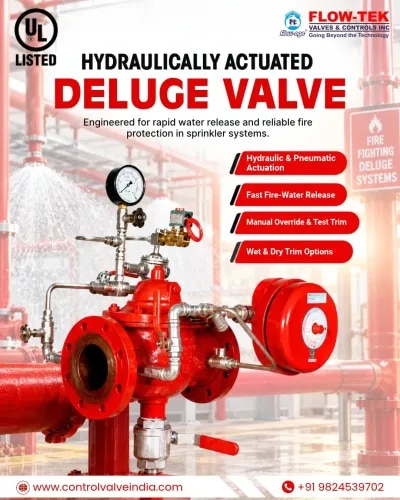
A Hydraulically Actuated Deluge Valve provides rapid water distribution throughout a designated fire protection zone. It uses a hydraulic pilot mechanism that keeps the main valve closed under normal conditions and automatically opens when the detection system releases control pressure.
Flow Tek offers industrial valve solutions for demanding applications, helping businesses select suitable deluge valve configurations for their fire protection requirements.
What Is a Hydraulically Actuated Deluge Valve?
A Hydraulically Actuated Deluge Valve is a pilot-operated diaphragm control valve used in fixed fire suppression systems. It uses water pressure in a priming chamber to keep the main valve closed during standby operation.
When a hydraulic detection device, manual release station, or compatible electrical release mechanism is activated, the pressure in the priming chamber decreases. This allows the main valve to open and supply water to the connected fire protection piping network.
Unlike conventional sprinkler systems, where individual sprinkler heads operate independently, a deluge system delivers water through all open discharge devices within the protected zone simultaneously.
How Does a Hydraulically Actuated Deluge Valve Work?
The valve operates through a pressure-controlled mechanism designed for dependable fire protection.
1. Normal Standby Condition: Water pressure is maintained inside the top priming chamber, keeping the main valve securely closed.
2. Fire Detection: A heat-sensitive pilot sprinkler, hydraulic detection device, or electrical release system detects a fire condition.
3. Pressure Release: The pilot mechanism releases pressure from the priming chamber faster than the restricted supply line can replenish it.
4. Main Valve Opening: The reduction in control pressure allows the diaphragm or clapper to move, opening the main water passage.
5. Water Discharge: Water flows through the distribution piping and reaches all connected open sprinklers or spray nozzles.
6. System Reset: After the fire event, the system must be inspected and reset according to the manufacturer's operating procedure.
Available Designs and Actuation Options
Flow Tek's referenced product range includes two basic valve body configurations:
* DA 210 – Straight Pattern: Designed for straight-through piping arrangements where the installation layout requires an inline valve configuration.
* DA 2100 – Angle Pattern: Suitable for installations requiring an angled flow path through the valve body.
Both designs share the same basic internal component arrangement as described in the product configuration.
The available trim and release arrangements include:
* Wet Trim (Hydraulic Actuation): Uses water pressure in the pilot detection system to activate the valve.
* Dry Trim (Pneumatic Actuation): Uses compressed air in the pilot detection line.
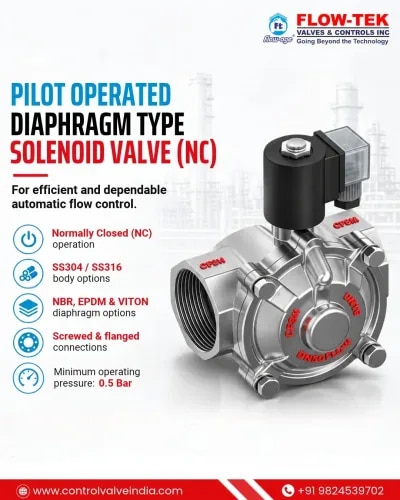
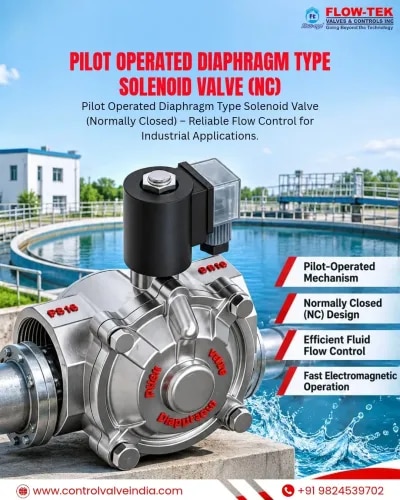
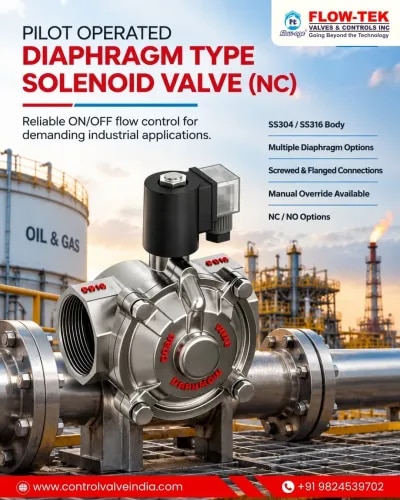
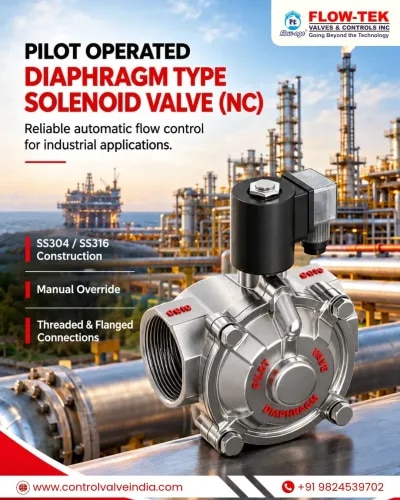
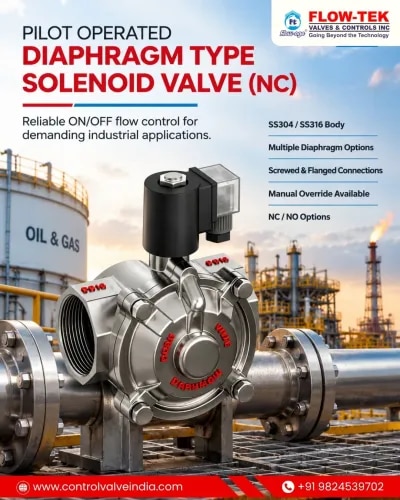
* Electrical Trim (Solenoid Actuation): Uses an electrical signal to operate the solenoid release mechanism.
* Manual Release Station: Allows manual activation during testing or emergencies.
The DA 210-B configuration references electrical solenoid actuation. Depending on the selected model, factory-piped trim assemblies can include pressure gauges, strainers, restriction orifices, check valves, manual override arrangements, and drain connections.
Key Features of Hydraulically Actuated Deluge Valves
* Quick Valve Activation: Opens when the pilot control pressure is released.
* Total-Area Fire Suppression: Distributes water through connected open discharge devices across the protected zone.
* Multiple Release Options: Supports hydraulic, pneumatic, electrical, and manual release configurations.
* Flexible Installation: Straight-pattern and angle-pattern body designs accommodate different piping layouts.
* Integrated Trim Assembly: Pilot valves and associated accessories support system operation and maintenance.
* Industrial Applications: Suitable configurations can be integrated with water-based and foam-water fire protection systems.
Industrial Applications
A Hydraulically Actuated Deluge Valve is commonly used in facilities that require rapid fire suppression and large-volume water discharge.
* Oil and Gas Refineries: Protecting fuel storage tanks, pipelines, and processing units.
* Chemical Plants: Supporting fire suppression around flammable chemical storage and manufacturing areas.
* Power Stations: Protecting transformer yards, turbines, and critical equipment.
* Aircraft Hangars: Providing large-area fire protection for aircraft and maintenance facilities.
* Petrochemical Industries: Supporting safety in high-risk processing environments.
* Marine and Offshore Installations: Providing fire protection for designated hazardous operating zones.
Why Choose Flow Tek for Deluge Valve Requirements?
Selecting a fire protection valve requires careful consideration of pressure conditions, piping arrangements, release mechanisms, and application requirements.
Flow Tek offers industrial valve solutions, including deluge valves and automatic control valves, for different industrial applications.
The company's product range also includes:
* Pressure Safety Valves
* Safety Relief Valves
* Digital Control Valves
* Deluge Valves
* Pressure Reducing Valves
* Pressure Reducing Stations
* Gas Pressure Regulators
* Self-Acting Pressure Control Valves
* Nitrogen Blanketing Valves
* Y Strainers
* Moisture Separators
Contact Flow Tek Today for Product Details and Pricing.
Frequently Asked Questions (FAQs)
1. What is a hydraulically actuated deluge valve?
A hydraulically actuated deluge valve is a pilot-operated diaphragm control valve used in fire protection systems. It remains closed through water pressure in its priming chamber and opens when the pilot control pressure is released.
2. What is the working principle of a hydraulic deluge valve?
The valve uses hydraulic pressure to keep it closed. When the pilot detection system operates, it releases pressure from the control chamber, allowing the main valve to open and supply water to the connected discharge devices.
3. What is the difference between DA 210 and DA 2100 deluge valves?
DA 210 is a straight-pattern valve design, while DA 2100 features an angle-pattern body arrangement. Both configurations use the same basic internal component arrangement, per the referenced product design.
4. What are wet trim and dry trim in deluge valves?
Wet trim uses water in the hydraulic pilot detection arrangement, whereas dry trim uses compressed air in a pneumatic pilot line. Both configurations activate the main deluge valve when the detection mechanism operates.
5. Can a hydraulically actuated deluge valve operate electrically?
Yes. An electrical trim arrangement uses a solenoid valve to release control pressure when it receives an appropriate electrical signal from the fire detection or releasing panel.